
Underground Explorers
Press coverage around SPUN and mycorrhizal fungal networks.
Climate change effects on soil microbial communities in a Neotropical montane forest
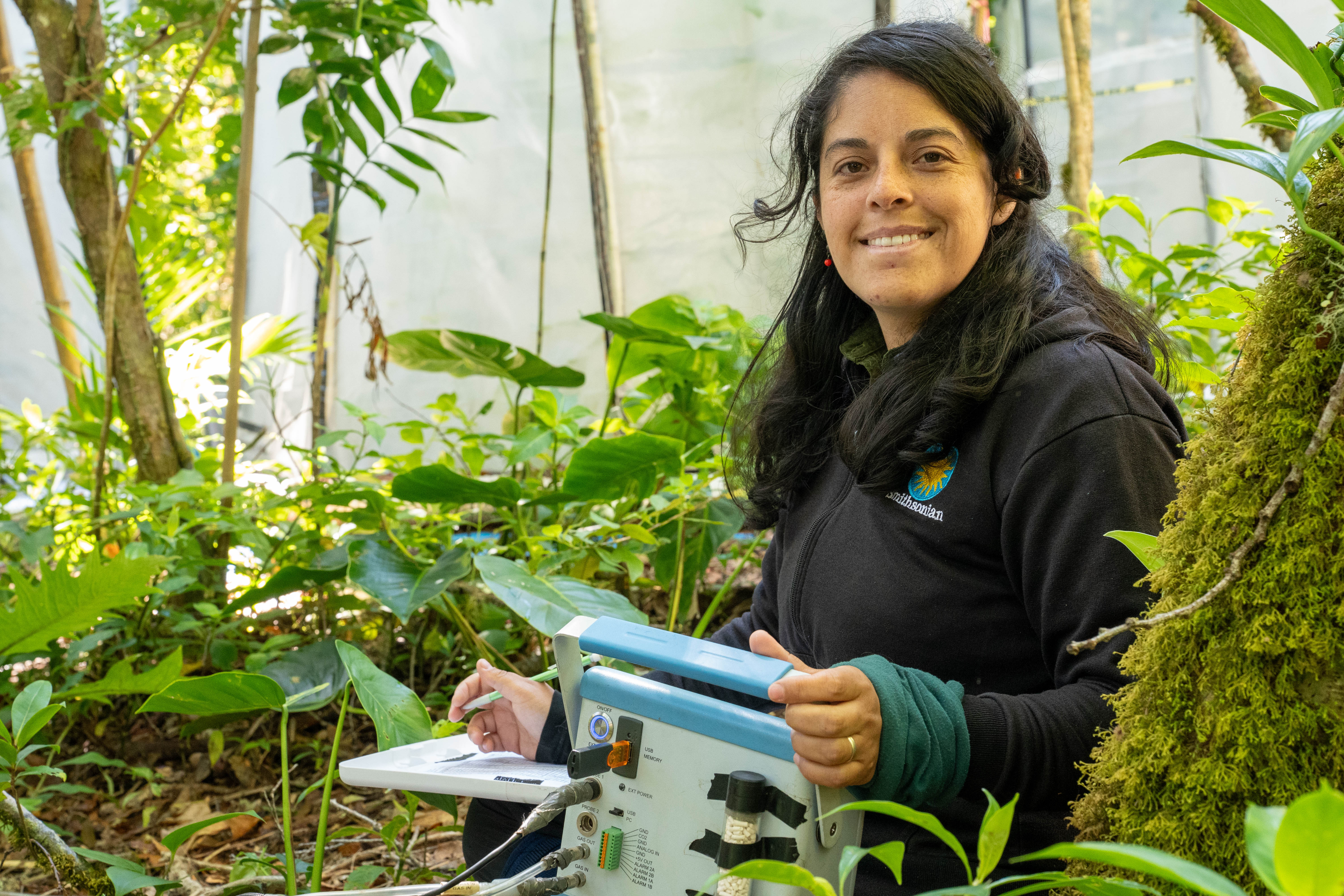
Cecilia Prada
Panama
Cohort:
2026
project abstract
Given the contribution of tropical forests to Earth's carbon sequestration, they play a key role in mitigating the effects of climate change. Despite this, substantial uncertainty remains regarding their capacity to function as carbon sinks. One reason for this uncertainty is the few tropical field experiments focused on belowground processes. Experiments in temperate forests showed that mycorrhizal associations are critical for understanding forest responses to elevated CO₂. In this project, we aim to understand how soil microbial communities respond to climate change, specifically increasing atmospheric CO₂ and temperatures, and how these responses affect nutrient cycling and plant growth. Using in situ open-top chambers in a Neotropical montane forest, we will provide insights into microbial community responses to elevated CO₂. Additionally, we will use an elevational gradient as a proxy for warming to assess how microbial communities respond to temperature and to clarify their role for soil conservation.
Photo by Octavio Fossatti on Unsplash


